
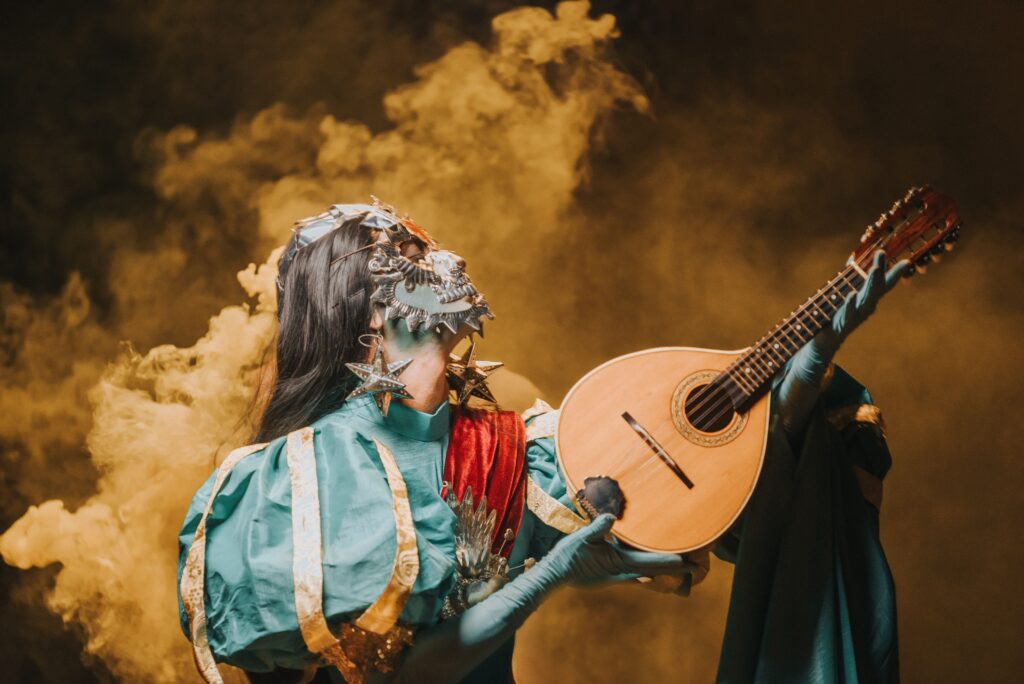
I feel compelled to share a moment I simply can’t seem to shake, even though half a year has passed since it happened.
I was in Lisbon on a chilly February evening, sitting in one of the city’s renowned casas de fado, still tucked away in its oldest neighborhoods, where this musical genre was born. I was completely absorbed by the magic of music. But fado is more than music. It is a state of mind, a feeling suspended somewhere between nostalgia, love, and sorrow, which the Portuguese poetically call saudade, a word so unique that no other language has ever found a true equivalent for it.
Isn’t it remarkable how a melody can express, through feeling alone, emotions that words could never fully explain?
But before we return to that little fado house in Alfama, let me tell you a little about the history of this enchanting music.
Short history of Fado
At the beginning of the nineteenth century, Lisbon was a city of contrasts, where the grandeur of the once-mighty Portuguese Empire coexisted with the poverty of a lower class increasingly burdened by the country’s political and economic realities.
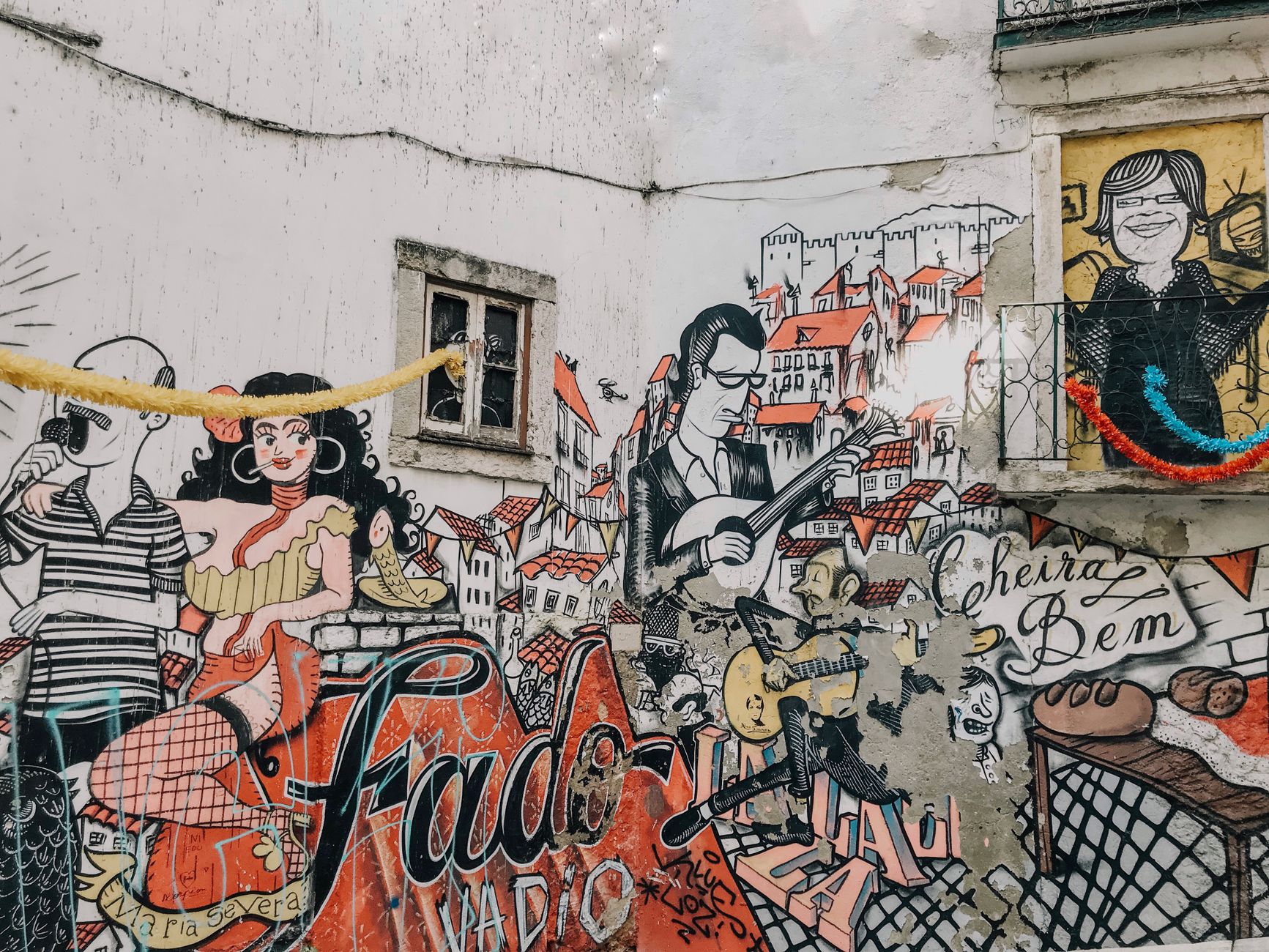
In the city’s poorer neighborhoods, along narrow streets lined with fish stalls and weathered taverns, the voice of a struggling social class began to emerge. Burdened by hard work and hardship, they found solace, and perhaps even hope, in singing.
It is remarkable how, throughout history, people have always found refuge in art, practicing it as a means of survival in the face of adversity. I firmly believe that our ability to express ourselves through art is one of humanity’s most beautiful qualities.
The port welcomed not only goods arriving from Portugal’s colonies, but also cultures, rhythms, unfamiliar sounds, aromas, and traditions, particularly from Brazil and Africa. Woven together with Portugal’s own cultural heritage and the lingering Arab influence left behind by the Moors after centuries on the Iberian Peninsula, these elements gave birth to fado, now a symbol of the Portuguese soul and, since 2011, part of UNESCO’s Intangible Cultural Heritage.
It is hardly surprising that one of fado’s first great legends was not an acclaimed performer gracing grand stages, but a courtesan born in one of Lisbon’s humbler neighborhoods: Maria Severa. Before tuberculosis claimed her life at only twenty-six, she had already become a familiar name in the city’s taverns, remembered for her extraordinary voice and the haunting sound of her guitar.

The queen of fado
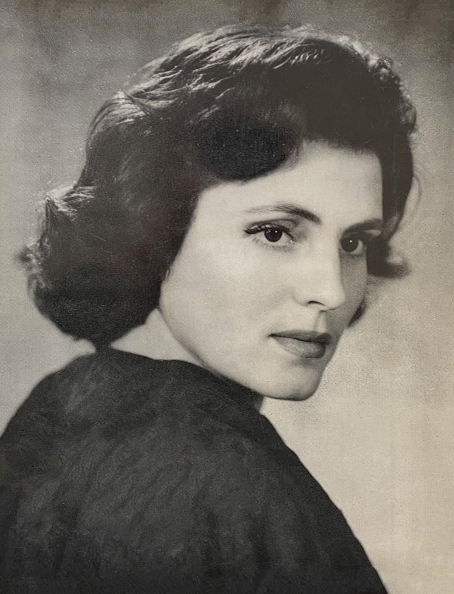
The woman who transformed fado from a local tradition into an international phenomenon, however, was Amália Rodrigues, known as the Queen of Fado, or simply, the voice of Portugal. Thanks to her, fado travelled far beyond Lisbon’s poorer quarters and reached some of the world’s greatest stages. It evolved, expanded its horizons, and found its way into other art forms, including poetry, without ever losing its essence: that profound melancholy that still defines it today.
Fado houses
But an authentic fado experience doesn’t happen just anywhere.
Fado is an almost sacred ritual, and its temple is the casa de fado, small, dimly lit restaurants where the clinking of glasses and the laughter of diners dissolve into reverent silence as soon as the first guitar chords begin to play.
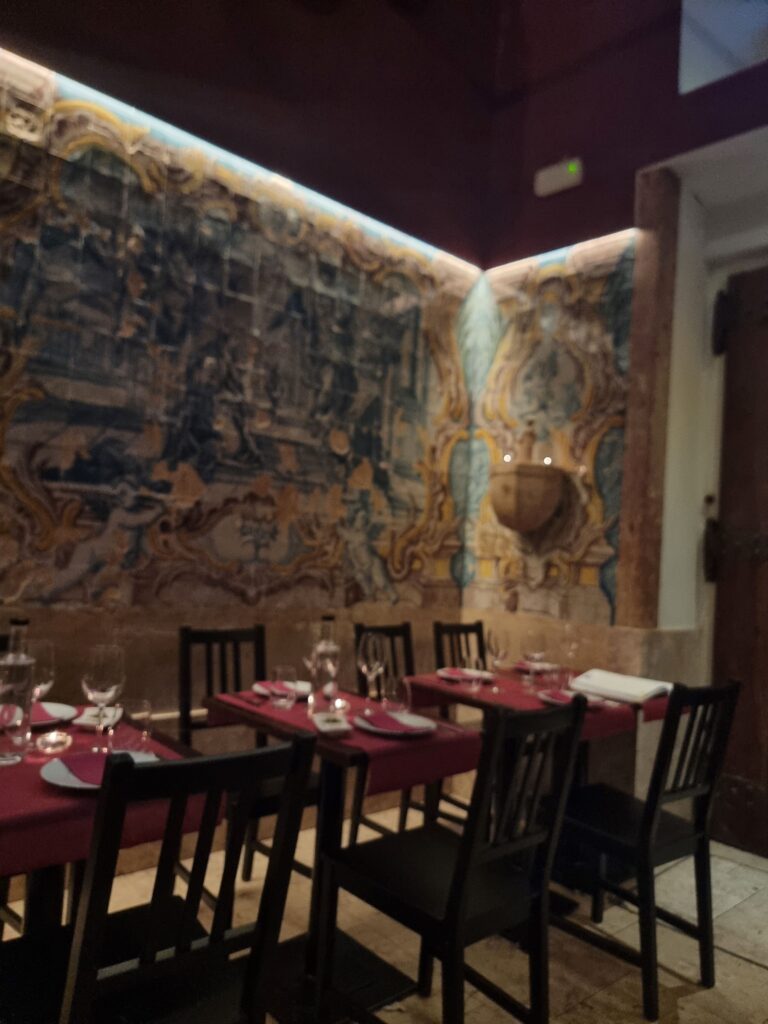
That was exactly where I found myself when two men, each carrying a chair in one hand and a guitar in the other, made their way through the tables toward the entrance of the restaurant. Two heavy wooden doors served as the backdrop for the performance that was about to begin.
There was no stage, no amplifiers, no microphones, and that made the entire experience feel all the more intimate and authentic. To the right stood the classical spanish guitar; to the left, the Portuguese guitar, without which fado simply cannot exist: a pear-shaped instrument with twelve strings and a sound so melancholic it seemed destined to accompany sorrow itself.
Complete silence fell over the room only when he slowly made his way toward the improvised stage. Even the loud table of Americans behind me fell quiet out of respect. I still remember his hand briefly resting on the back of my chair as he passed.
He limped.
In silence, he greeted us with a simple nod, leaned against the wooden door, and began to sing. No introduction. No unnecessary words. He let the music speak for him.
I’ll admit, I don’t understand Portuguese, so I couldn’t tell you exactly what the lyrics meant. But I understood, or perhaps more accurately, I felt every emotion this man painted with his voice, a voice that seemed heaven-sent.
His pale face, faintly illuminated by a dim light bulb, the beads of sweat running down his forehead, the pain in his eyes and in his voice….I wasn’t merely witnessing a small concert of traditional Portuguese music. I was witnessing poetry in motion, a moment of pure artistic genius that, I am certain, everyone else in the room, though just as speechless as I was, experienced with the very same intensity.
I don’t know how familiar you are with Stendhal Syndrome, that overwhelming feeling of ecstasy brought on by encountering a work of extraordinary beauty, so powerful it leaves you utterly transformed. That is exactly how I felt in that moment, as though I were witnessing a miracle. It had only happened to me once before in my life, when I stood before Gustav Klimt’s The Kiss in a museum in Vienna and found myself bursting into tears without understanding why.
Had this been a painting, perhaps it would have been easier to describe.
But how do you put a voice into words?
A fire born of love and suffering seemed to erupt from the very depths of his soul. Yet it wasn’t his voice itself, as divine as it was, that struck you straight in the heart. It was the emotion he managed to convey, as though his very being had dissolved into the music he was performing.
I felt as though I were witnessing a conversation with God, because art, I believe, brings us closer to the divine. It stirs something deep within us, reaches every hidden corner of the soul, and reveals parts of ourselves we never knew existed.
There are countless talented people in the world. People who can sing any melody and reach every note with perfect precision, yet never truly reach the hearts of those listening.
True art is more than craftsmanship.
It is creation touched by the divine.
To me, this man, whose name I do not know, embodies the purest definition of an artist. I dare call him an angel, because his voice moved me so profoundly that I know I walked out of that room richer in spirit than when I had entered it.
And it seems that angels sing fado in the taverns of Lisbon.
A playlist for wandering through Lisbon
And if there’s one piece of advice I’d leave you with, it’s this: don’t experience Lisbon in silence.
Go to a fado house and get the full authentic experience of Portuguese culture. Bring a pair of headphones with you and let fado become the soundtrack to your walks through the city. Some places seem to reveal themselves a little differently when accompanied by the right song.
Here are the soundtracks I’d choose:
Alfama — Estranha Forma de Vida by Amália Rodrigues.
Get lost among the neighborhood’s narrow alleyways and tiled façades while listening to what many consider the very essence of fado.
The Tagus Riverside — Barco Negro by Amália Rodrigues.
Walk beside the river and remember that the sea has always been one of Portugal’s greatest storytellers. Sailors poured their homesickness into songs, while wives and daughters mourned those who never returned home.
Tram 28 — Lisboa Não Sejas Francesa by Amália Rodrigues.
As Lisbon unfolds outside the tram windows, this playful song feels like a love letter to the city’s timeless character.
Find more ideas of things to do in Lisbon here.
And if you would like to add another sensorial layer to your exploration and get an actual taste of Lisbon, here you can find my favorite dining spots in the city.
Do you have a favorite fado song? Please share it in the comments as I love discovering new music!